
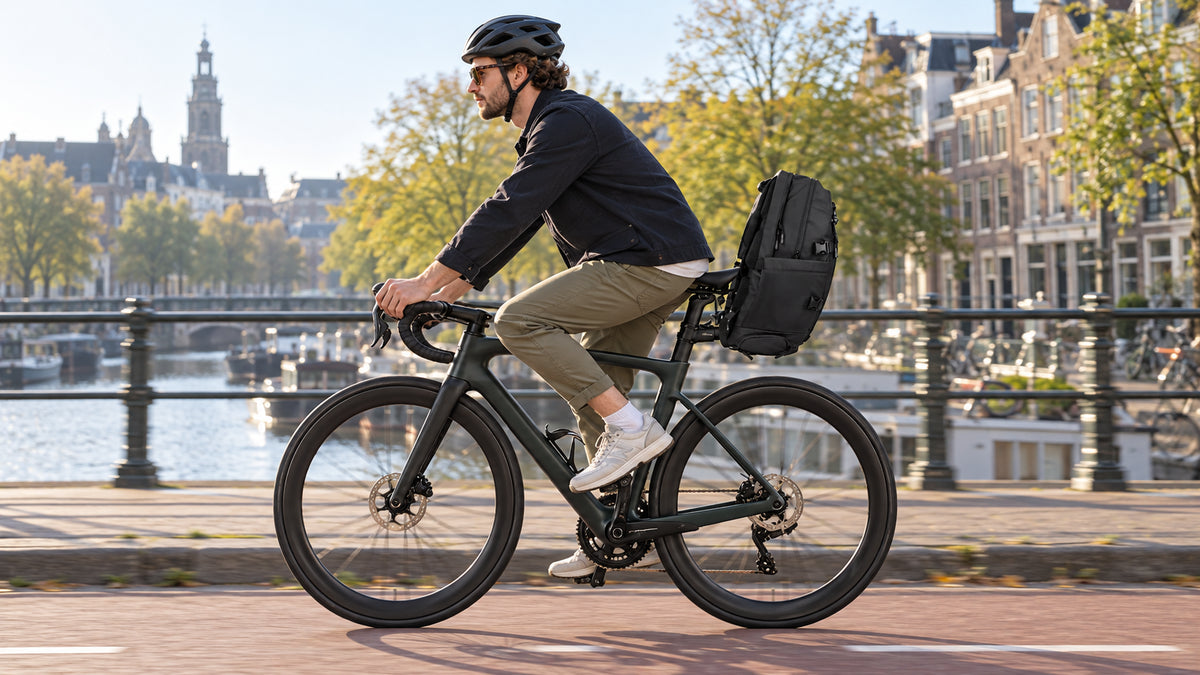
You have packed a laptop, lunch and a change of clothes. Nothing unusual—just what you need for a day away from home. But halfway to work, your shoulders feel the straps and the back of your shirt is getting damp. Searching for a better cycling backpack seems sensible. Then another question appears: should you put the bag on the bike instead?
A rear bike rack is one answer, but it is not the only one. You can carry a small load on your body, use rack-mounted luggage, or choose a bag with its own bike mounting system. The useful question is where your everyday load should sit—and what happens to it when you stop riding.
Why a better cycling backpack may still leave your back feeling hot
A conventional backpack is convenient. It needs no installation, follows you onto public transport and goes straight into the office. For a short ride with a few light items, that simplicity can be enough.
As the load grows, however, a different strap or back panel cannot change where the weight sits. Your shoulders still carry the bag. A panel pressed against your shirt also covers part of your back, even if the pack includes ventilation channels.
Moving the bag onto the bike removes that carried load from your shoulders during the ride. It also leaves your back uncovered by a backpack. You will still sweat from pedalling, heat and hills; changing the carrying system does not guarantee a dry shirt. It addresses one source of discomfort you can control.

When a bicycle rear rack makes sense
A bicycle rear rack provides a platform for compatible luggage. Panniers hang beside the rear wheel, while other bags sit on top. For riders who regularly carry groceries or touring equipment, a correctly matched rack-and-bag system can be a practical choice.
If your bike already has a suitable rack, start there. Replacing the whole system may add little value if your current bags fit your routine. Some panniers include shoulder straps or convert into backpacks, so off-bike carrying depends on the particular bag.
When comparing bike bags for rear rack use, check the attachment system, rack dimensions, heel clearance and the weight limits of the bike, rack and bag. Capacity in litres tells you how much space is available; it does not tell you how much weight the complete setup can support.
A rack becomes less appealing when you do not want one fitted, your bike lacks straightforward mounting points, or you want one familiar backpack to follow you through the entire day. Those are reasons to compare alternatives, rather than assume all rear luggage needs the same hardware.
Which bag suits your bike’s look?
Panniers can look right at home on a city bike or touring bike, especially when the bike already has mudguards and a rear rack. They give the setup a practical, ready-to-go character. A single compact pannier keeps things understated, while a matching pair creates a more purposeful touring look.
If you prefer to keep the sides of your bike clear, a Floating Backpack offers a different silhouette. It sits upright behind the saddle rather than beside the rear wheel, without a traditional rear rack. On a road or hybrid bike, that can suit riders who want a cleaner-looking setup and a bag they can carry into work. The backpack is still a noticeable part of the bike, so the better-looking choice comes down to your bike’s proportions and your own taste.
Seatpost bike rack, frame pack or Floating Backpack?
A seatpost bike rack attaches around the seatpost rather than relying on the usual frame mounting points. It is still a rack: the luggage needs to work with its platform or supports. Check the rack manufacturer's seatpost requirements and load rating before choosing one.
A frame pack fits within or along the bicycle frame. It can be useful for tools, snacks and other compact items, depending on its size. The frame triangle, bottle cages and your packing list determine whether it has enough usable space. A large work laptop and folded office clothes may call for a different layout.
A Floating Backpack takes another approach. EasiCyco uses this name for a backpack held behind the saddle by its mounting system. The bag transfers to your shoulders when you walk. It does not require a traditional rear rack, but it does require installed mounting components and a compatible bike.
Think of it as a bicycle backpack with two carrying modes. The benefit is continuity: pack once at home, let the bike carry it on the road, then take the same bag inside.
| Option | Worth considering when | Check first |
|---|---|---|
| Worn backpack | Your load is light and the ride is short | Loaded comfort and back coverage |
| Rear rack and bags | You want dedicated bike luggage | Rack fit, attachment and off-bike carrying |
| Frame pack | Your essentials fit the available frame space | Bag shape and bottle access |
| Floating Backpack | You want bike-mounted storage and a walking backpack | Saddle, seatpost and wheel clearance |

What the 35L Multi-Purpose changes in your daily routine
The EasiCyco 35L Multi-Purpose Floating Backpack offers compartments for organising commuting and travel items. Its Penta-Lock system supports the bag behind the saddle, leaving your shoulders free while riding.
After the bike-mounted components are installed and adjusted, EasiCyco describes daily attachment or removal as approximately ten seconds. That is the everyday changeover, not the initial installation. Allow time to follow the setup instructions and check the fit before your first ride.
At your destination, lock the bike, release the bag and carry it inside. Your valuables go with you rather than staying in luggage outside. The same routine works for a stop at a café or a walk after riding, without transferring everything into another bag.

Check fit before choosing a rack-free cycling backpack
Bike type alone does not establish compatibility. A road bike, mountain bike or e-bike still needs the right saddle, exposed seatpost and space above the rear wheel.
- For this model, check for a dual-rail saddle and at least 5 cm of exposed seatpost.
- The standard mount fits round seatposts. Non-round designs require the Universal Non-Round Seatpost Adapter.
- Check wheel clearance with the bag loaded. On a suspension bike, account for suspension movement; clearance while parked may change when you sit on the saddle.
- Check that the bag does not interfere with your riding position, rear light or getting on and off the bike.
Follow the installation guide and complete a short test ride with a modest load. Practise getting on and off in front of the saddle rather than swinging your leg over the rear-mounted bag.
Pack for the ride you actually do
Lay out your usual items before choosing capacity. Check the dimensions of any laptop or bulky container against usable bag space, not just the litre figure. Keep dense items secure so they cannot shift, and fasten loose straps away from moving parts.
EasiCyco lists a maximum supported load of 15 kg, with under 8 kg recommended for everyday riding. Extra space is useful for a jacket or spare clothing; it is not a reason to fill the bag to its maximum weight.
The body is rated IPX5 water-resistant and includes a rain cover. For prolonged heavy rain, use the cover and keep electronics in a waterproof pouch. Make sure closures are properly secured before setting off.
Do you need a rear bike rack?
Choose around your actual journey. A light backpack may suit a quick ride. A compatible rack and panniers may suit frequent shopping or touring. A frame pack may hold everything you need for a lighter outing.
If you want your bike to carry your daily load and still use the same bag when walking, a Floating Backpack is another option to compare. Start with your usual packing list, then check the mounting requirements against your bike.
For a closer look at how this setup works, see the 35L Multi-Purpose Floating Backpack's mounting system and compatibility details. Use the installation guide to check saddle fit, exposed seatpost length and rear-wheel clearance before deciding whether this carrying method suits your commute.