
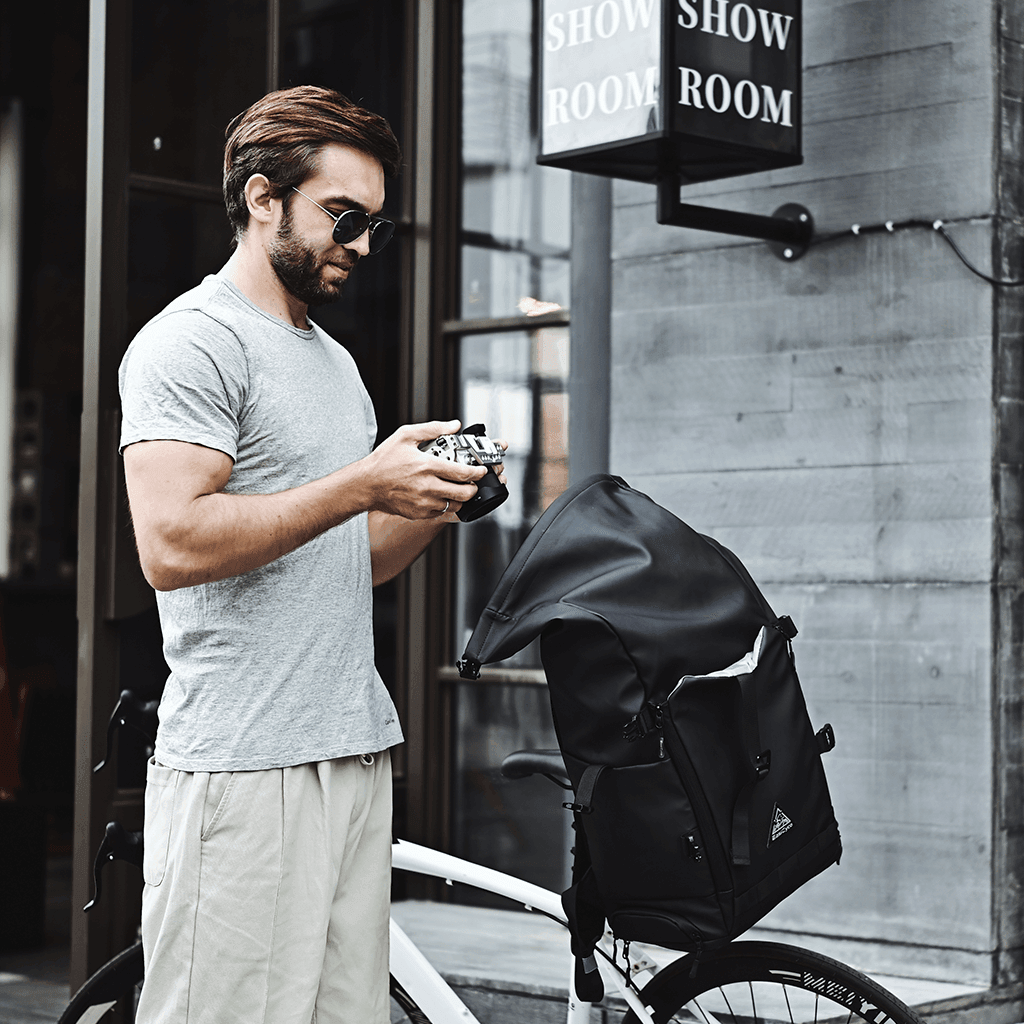
It starts raining halfway to work. You pull over, open your cycle backpack and find the lunch you packed last, the shirt you folded first thing this morning and, underneath both, the jacket you need right now. With the roll-top version of the EasiCyco Floating Backpack, there’s a simple way to avoid that roadside unpacking exercise: start with the next time you’ll open the bag and work backwards.
Think of three stops on a typical morning. At the bike stand you need your lock. At the office door you need your pass. At your desk you need your laptop. Lunch can wait until noon. Those four things might fit neatly in a pile on the kitchen table, but stacking them in that order inside a deep bag puts the lock at the bottom. Here’s how to give each item a place that makes sense once you’re on the road.
Start with the next stop
Lay out what you actually carried home yesterday. A charger that lives at work can stay there; a charger you take between buildings needs a spot of its own. Put the things you reach for at a stop in one group: keys, pass, lock, rain jacket. Put the things you’ll unpack indoors in another. A bright pouch for the first group of small items is easier to spot than a loose black key fob at the bottom of a dark cycling backpack.
On Saturday, use the same exercise with a different destination. Say you’re riding to a picnic spot an hour away. The laptop stays home, the sandwiches need protection from being squashed, and the spare layer needs to come out as soon as you stop. Leave room for the layer you might take off, too. A bag that is just big enough on a chilly morning can be frustratingly full by the first sunny climb.
Give heavy items a place where they cannot roll
A loose lock is a good place to start. A folded jacket barely makes a sound when it moves; a metal lock knocking against your lunch tin makes itself known at every bump. Wrap the lock or slip it into a snug pouch, then place it low and near the middle of the bag. If you need it before anything else, keep a clear route down one side so you can lift it out without tipping the bag upside down.
Lift the packed bag by its handle and tilt it gently to either side. If something thumps, open it and find the gap. A rolled T-shirt can fill a space beside a lunchbox; a bundle of cables won’t hold a heavy lock in place. The aim is to stop things travelling across the bag, not to fill every spare litre. Try it with a bicycle backpack you wear, too. A biking backpack with a loose lock inside is no more pleasant on your shoulders than on a mount.
Separate your laptop, lunch and change of clothes
Slide the laptop into its padded sleeve before you add loose items. Keep hard corners away from the screen: a plug pressed flat against a laptop lid is easy to overlook until you tighten the bag. Coil the cable into a separate pouch. If you plug in at your desk every morning, put that pouch beside the sleeve so both come out together.

Next, close the lunchbox, check the seal and set it upright on a level base. Give anything that could leak a second barrier, especially if it shares the bag with electronics. Put your clean shirt in its own light sack beside the box. On the journey home, that sack can keep the clean layer apart from a damp one. Empty the damp kit when you get in, before the bag gets packed again tomorrow.
Pack your rain jacket last
Fold the jacket loosely enough that you can recognise it by touch. Lay it across the top just before you close the roll. Try pulling it out with the bag upright on a bench. If the keys come tumbling out with it, give them a zipped pocket or pouch of their own. Keeping a pass and a key together also means one less thing to look for while you’re standing outside the office.

Even if you searched for a “waterproof cycling backpack,” plan for the moment you open it in the rain. A rain cover over a closed bag cannot protect an exposed laptop while you rummage inside. Keep electronics in a separate dry bag when prolonged rain is expected, and put the rain cover somewhere you can reach it at the first sheltered stop. On the return trip, keep the wet jacket away from the computer.
If you use two cycle bags, give each a job
A useful way to divide bicycle bags is to ask what comes indoors with you. A small frame pack can hold a tube, tyre levers and a multitool on a weekend ride. Food and an extra layer can go in the bag you take to the picnic table. For the commute, bring valuables inside when you park. Keeping the same arrangement from one ride to the next makes it easier to notice a missing tool.
Already using a rear bike rack? A pair of panniers can split bulky groceries between the two sides. When choosing bike bags for rear rack use, check how their hooks fit your particular bicycle rear rack and how the lower attachment secures them. A seatpost bike rack has its own fitting and load instructions. The EasiCyco Roll-Top uses its dedicated mount behind the saddle, so you don’t need a separate rack to use it. Keep the setup you have in mind when deciding where the weight goes.
Do one last check with the bag loaded
Before you leave, close the roll, fasten the buckles and tuck away loose straps. With a bike-mounted bag, check the attachments and rear-wheel clearance after loading it. A bag may sit differently with a laptop and lunch inside than it did when empty. Follow the instructions for your bag and mount; spare space at the top isn’t a reason to keep adding weight.

Finally, stand beside the bike and pretend you’ve arrived. Can you get to the lock without setting your lunch on the pavement? Can you reach the office pass without opening the main compartment in the rain? Move whichever item slows you down. That one change is more useful than memorising somebody else’s packing list. If you use the Roll-Top, check the capacity, recommended load and mounting instructions for the EasiCyco Floating Backpack before packing for your next ride.