
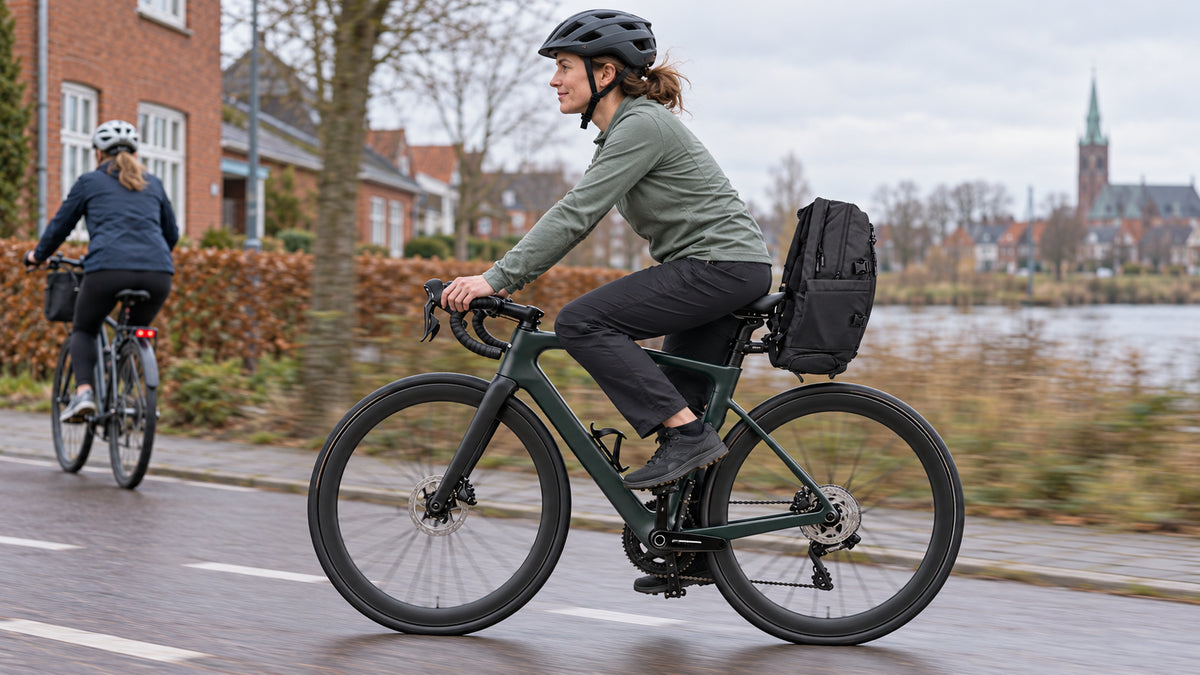
Your bike bag works on the bike. What happens when you park?
It is an easy detail to miss while planning a Saturday ride. You check the route, pack a layer and choose somewhere for lunch. Then you reach a small town, lock the bike and realise you still need to carry your camera, water and jacket through the market. The ride was only part of the day.
Choosing a cycling backpack or bike bag around the whole outing means thinking about those stops before you leave. How does the bag detach? Can you carry it comfortably? Will you need another bag for walking? Those questions can matter as much as capacity.
Plan the stop as carefully as the route
Picture a ride along quiet lanes to a town you have been meaning to visit. There is a bakery near the square, a weekend market and a riverside path worth exploring on foot. You might park for ten minutes, or leave the bikes while you spend an afternoon walking.
The same packing list can feel quite different across those plans. A phone and thin jacket may fit in a small bag. Add lunch, a camera and space for something from the market, and you have a load that needs a proper carrying arrangement.
Before comparing bags, write down what you will take away from the bike. Separate valuables from items you could leave behind, but do not assume unattended luggage is secure. If you expect to take almost everything with you, a bag that changes easily from riding to walking deserves a place on your shortlist.

Compare how you will carry each bag on foot
A conventional bicycle backpack is straightforward at a stop. Lock the bike and walk away with the bag already on your shoulders. For a light load and a short ride, that may be all you need. The trade-off is carrying that weight on your body while cycling too.
A pannier transfers the load to the bike. Once removed, its usefulness on foot depends on its design. A carry handle may suit the short walk to a café table. A shoulder strap can help over a longer distance, while convertible panniers add backpack straps. Check whether hooks or mounting parts press against your body and how the bag hangs when loaded.
A rack-free bike-mounted backpack offers another arrangement: the bike carries it during the ride, and you wear it when walking. It still needs a compatible mounting system. That makes installation fit and off-bike comfort two separate checks.
| Carrying option | At the stop | Try before choosing |
|---|---|---|
| Worn backpack | Ready to walk with | Comfort while riding with your usual load |
| Pannier | Detach, then use its carrying system | Loaded walking comfort and hardware placement |
| Bike-mounted backpack | Detach and put on the shoulder straps | Bike compatibility and the changeover routine |
Make parking and taking your bag two separate steps
Removing a bag does not secure the bicycle. Choose an appropriate parking place, follow local rules and use a suitable lock to secure the frame to a fixed anchor. Avoid blocking doors or pedestrian routes. If there is nowhere suitable to leave the bike, change the stop rather than rely on a quick visit.
Then deal with your belongings. Take valuables with you, close the bag and check that nothing small is left in an outside pocket. Keep the lock key somewhere accessible instead of burying it under your lunch.
This is where a practice run helps. Load the bag at home, remove it from the bike and walk with it for a few minutes. A handle that feels fine across the kitchen may be awkward halfway through a market. Check how you will carry your helmet too, leaving a hand free for opening doors or paying for food.

Pack so you do not have to unpack at every stop
Organise the bag around the things you will reach for throughout the day. Keep your wallet and phone accessible without opening the main compartment in a busy square. Put a rain layer somewhere you can reach before the rest of the contents get wet.
Keep lunch in a closed container and separate it from clothing or a camera. Leave some usable space if you plan to pick up bread or a few groceries. Extra volume is helpful, but whatever you add must still be comfortable to carry and within the limits of your bike and luggage system.
A small removable pouch can keep essentials together. It is useful if most of your luggage can stay with you at the café while you make a brief trip to the counter. It is less useful if the whole day becomes a repeated exercise in moving items between bags.
Where a Floating Backpack fits into a weekend outing
The EasiCyco 35L Multi-Purpose Floating Backpack is designed for this change between bike-mounted storage and walking. It sits behind the saddle on its mounting system, without a traditional rear rack, then detaches to become a backpack.
Its compartments can help separate the things you need during a day out. The useful question is whether that layout suits your actual belongings. Try your camera case, food container and spare layer rather than judging usable space by litres alone.
Check the bike before planning around this setup. The model requires a dual-rail saddle, at least 5 cm of exposed seatpost and sufficient clearance above the rear wheel. Non-round seatposts need the appropriate adapter. Check clearance with the bag loaded and account for suspension movement where relevant.
After initial setup, daily attachment or removal is described as taking approximately ten seconds. Follow the instructions and practise with your own load. For everyday riding, EasiCyco recommends keeping the load under 8 kg. A roomy bag should not become an excuse to bring everything.

Give the return ride a little thought
Your packing list may change over lunch. A jacket comes off, a bottle gets lighter and market purchases take up the space you left. Before setting off, repack loose items, secure the bag and check that straps stay clear of the wheels and drivetrain.
Check rear-light visibility and tyre clearance again. If the load has changed noticeably, begin with a short, easy stretch to see how the bike feels. Leave yourself time to adjust it rather than discovering a problem in traffic.
Choose for the whole day
The right bag depends on how much you carry, how far you ride and what you do after parking. A small backpack, a pannier with a good carrying system or a bike-mounted backpack can each make sense. Include the walk to lunch and the hour at the market in that decision.
If you are comparing a Floating Backpack with your current setup, review the Multi-Purpose mounting and compatibility details alongside your day's packing list. A useful bike bag should be easy to live with when the wheels stop turning.