
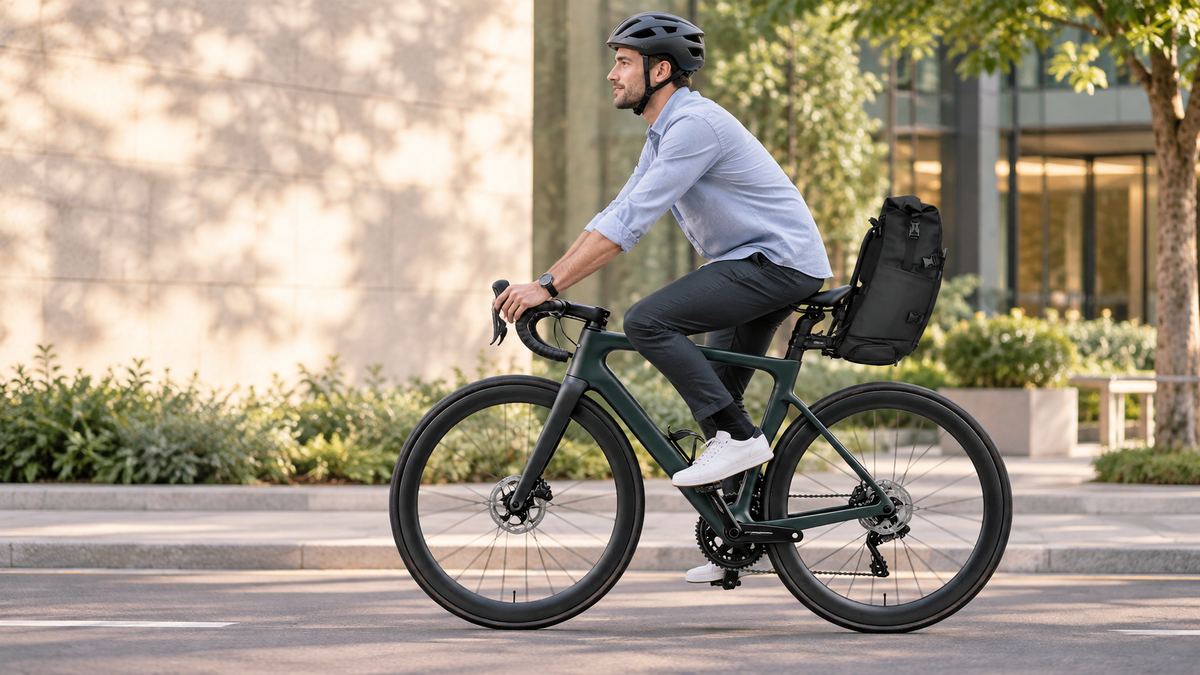
Your laptop, a change of clothes, lunch, a charger, and perhaps a rain jacket: a normal working day can mean carrying quite a lot on your bike. Choosing a cycling backpack for commuting means finding room for those essentials without making every journey feel hot and uncomfortable.
For commuting, two common choices are a cycling backpack and a pannier. A backpack is convenient when you get off the bike; a pannier lets the bike carry the load. There are also backpacks designed to mount on the bike during your ride.
The right choice depends on what you carry, how your bike is equipped, and what happens after you park. Start with those questions before comparing pockets or buying the largest bag you can find.
Start with what you actually take to work
Lay out a typical day's belongings before choosing your bag. Include the awkward items, such as your lunch container, shoes, and laptop charger—not just your laptop and a neatly folded shirt.
A useful commuting bag should let you:
- Keep your laptop separate from food and damp clothing.
- Pack lunch without crushing it beneath heavier items.
- Reach your keys and work pass without unpacking everything.
- Add a light jacket or a few groceries on the way home.
Capacity in litres is only part of the answer. A bag may have enough total space while still being too narrow for your lunch box or too short for your computer. Check compartment dimensions and the shape of the main opening.
If you carry a small daily load, extra capacity may simply mean extra bulk. If you regularly add gym clothes or layers, an expandable bag gives you more flexibility. Remember that spare space is not an invitation to exceed the bag or mounting system's load limit.

Cycling backpack or pannier: which suits your commute?
A backpack is convenient beyond the bike
A conventional cycling backpack is easy to take into an office, onto a train, or through a shop. It needs no bike-mounted hardware and can be a straightforward choice for a lighter load.
Look for a fit that feels comfortable in your riding position. The bag should stay in place when you look over your shoulder, and the straps should not dig in when it is loaded.
The trade-off is that you carry the weight yourself. The back panel also covers part of your back, which can feel warm even when the bag has ventilation channels.
A pannier keeps the load off your shoulders
A pannier attaches to a compatible rack, leaving your back uncovered. If your bike already has a suitable rack and you carry a substantial daily load, it is worth considering.
Check how the pannier works once you arrive. Does it detach easily? Is it comfortable to carry upstairs? Does it provide the laptop protection and organisation you need? Some models include backpack straps, so off-bike convenience varies.
Rack compatibility, attachment security, heel clearance, and load limits matter as much as storage capacity.
| Your commuting priority | An option worth considering |
|---|---|
| A light load and frequent walking or train transfers | A conventional cycling backpack |
| Keeping your back clear on a bike already fitted with a rack | A compatible pannier |
| Backpack carrying off the bike, without wearing it while riding | A bike-mounted backpack, subject to fit |

What actually helps with a sweaty back?
A ventilated back panel may improve airflow, but it still places a bag against your body. If that covered area is your main source of discomfort, consider whether the bag needs to be on your back at all.
Moving it onto the bike removes the contact between the backpack and your back and takes the bag's weight off your shoulders. That can help reduce the trapped heat and damp feeling associated with wearing a pack.
It does not guarantee a sweat-free commute. Warm weather, hills, clothing, and riding effort still matter. A comfortable pace, lighter layers, and a little extra time before your first meeting can also help.
The useful question is: do you need better ventilation in a backpack, or would you rather keep your back uncovered?
Look beyond capacity: four everyday details
1. Laptop protection
Check the sleeve dimensions against your actual laptop, including its protective case. Screen size alone does not establish fit. Padding is useful, but pack hard objects so they cannot press against the computer, and keep liquids in securely closed containers away from it.
2. Weather protection
A roll-top opening is a closure style, not proof that the whole bag is waterproof. Check the manufacturer's stated protection, seams, zippers, and closure instructions. For wet commutes, a rain cover and a separate waterproof sleeve for electronics can provide additional protection.
3. Organisation and access
A large main compartment works well for clothing and bulky items. Smaller pockets make keys, chargers, and a work pass easier to find. If you choose an open roll-top design, packing pouches can keep clothing separate from lunch and smaller accessories.
4. The transition from riding to walking
Think through your arrival: park, secure the bike, remove the bag, and walk inside. With a mounted bag, check the release mechanism and how the carrying straps are secured during riding. A convenient morning routine matters more than an extra feature you rarely use.
Can you carry a backpack on the bike without a traditional rear rack?
Some purpose-built systems allow this. The EasiCyco Roll-Top Cycling Backpack mounts behind the saddle and converts to a backpack for walking. It includes a mounting kit, a 30–40L expandable compartment, and a sleeve listed for laptops up to 16 inches.
This approach may suit commuters who want their back uncovered while riding and a backpack when they arrive. Its open storage layout offers flexibility for bulky items, although packing pouches may help organise smaller belongings.
Fit comes first. EasiCyco lists round seatpost compatibility of 25–35 mm, a dual-rail saddle, and sufficient installation space; non-round seatposts require additional accessories. Check the installation guide for your setup, including wheel clearance and rear-light visibility. The bag also occupies space behind the saddle, so consider how you get on and off the bike.

Choose for your whole working day
If your load is light and you spend plenty of time walking between rides, a conventional backpack may meet your needs. If your bike already has a suitable rack, a pannier is a practical way to carry your belongings without covering your back.
If you want backpack convenience without wearing the bag during the ride or fitting a traditional rear rack, a compatible bike-mounted backpack is another option.
Before choosing, check three things: does your everyday kit fit, is the carrying system suitable for your bike and journey, and is the bag easy to take with you after parking? Those answers will tell you more than capacity alone.