
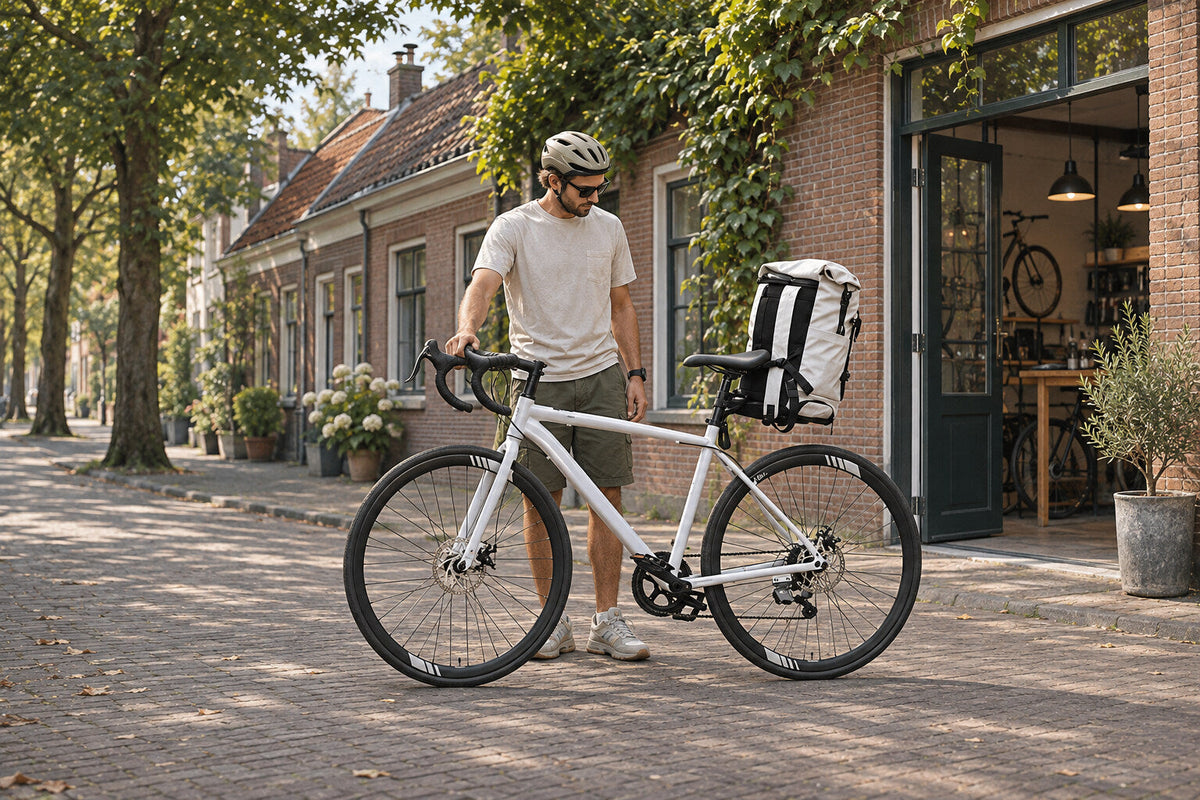
Two bikes can have the same wheel size and still leave very different amounts of room behind the saddle. The saddle height, the shape of the seatpost and the accessories already on the bike all affect whether a bag will fit. A photo of someone riding your model of bike is a useful starting point, but it cannot tell you what space you have on yours.
The EasiCyco Floating Backpack is a seatpost-mounted cycling backpack that attaches behind the saddle using its own mounting system. Before choosing the Roll-Top or Multi-Purpose, check three things: the rails under your saddle, the section of seatpost available for the mount and the space above the rear wheel.
1. Look under the saddle for two usable rails
Stand beside the bike and look up beneath the saddle. On a dual-rail saddle, two separate rails run underneath the shell and are held by the seatpost head. The rails are easier to identify from behind or below than from a side photo, where one may hide the other.
The Roll-Top compatibility guide calls for a dual-rail saddle. Seeing two rails is the first check. Next, compare the available area with the saddle attachment shown in the product instructions. A rear light bracket, a saddle bag mount or an unusual seatpost head may occupy the area the hardware needs. Check the space with any accessories you plan to keep in place.
If the rails are oval, made of carbon or otherwise different from the examples, check the saddle manufacturer's instructions and ask EasiCyco to confirm your setup before ordering. A saddle model name and a clear underside photo are more useful than guessing from the bike's brand. Keep the saddle at the height and position you actually ride; that is the setup you want to evaluate.

2. Check the shape and length of the exposed seatpost
Look at the part of the post where the mount would sit. A round post has a circular cross-section; a D-shaped or aero post may have a flat back or a longer profile from front to rear. The profile near the saddle head can differ from the lower section, so check the intended mounting area rather than relying on how the frame looks.
For a round post, look for the diameter marked on the post or in the bike's specification. The current Roll-Top FAQ lists a round-post range of 25.4–34.9 mm. The compatibility section also calls for at least 5 cm of exposed seatpost. Record the available straight section and note any obstruction, such as a light clamp. Do not count the flared saddle head as straight mounting space.
For a non-round post, start with the Universal Non-Round Seatpost Adapter. The right insert depends on the shape at the contact point. An adapter addresses the post profile; you still need usable saddle rails and enough room above the wheel. If you use a dropper or suspension post, confirm where the manufacturer permits an attachment and whether the assembly stays clear through its travel. Do not assume the moving section is an approved mounting surface.

3. Measure vertically from the rear tyre to the seatpost reference point
Put the bike upright on level ground with the tyres and saddle setup you normally use. Find the highest point of the rear tyre. Then identify the upper end of the straight seatpost section as shown in EasiCyco's diagram. Compare the height of those two points vertically. A ruler held at an angle between them will give you a different number.
The current Roll-Top FAQ calls for a minimum of 10 cm (4 in) between those reference levels. This is a separate check from the exposed seatpost length. It is also a pre-purchase measurement: it does not mean an installed bag must sit exactly 10 cm above the tyre.
Check what else occupies that space. A mudguard, rear rack or saddle-mounted accessory can affect the room available even if the tyre-to-post measurement meets the guideline. On a bike with rear suspension or a dropper, a parked photo cannot tell you how much room remains through movement. If clearance is close or changes with travel, ask for a fit check before buying.

Under 165 cm and riding wheels larger than 27 inches? The Roll-Top product page advises riders who meet both conditions to remeasure the exposed seatpost length and the vertical clearance above the rear wheel before installation. Check both before ordering, with the saddle at your normal riding height. These two conditions flag a setup that needs a closer check; they do not automatically rule out a fit.
What to do if the fit is uncertain
If your bike meets the rail, post and clearance requirements, you can move on to choosing the bag layout. If the post is non-round but the other checks look good, confirm the adapter and insert first. If the measurements are borderline or the bike has a less common saddle or moving post, send a fit enquiry before ordering.
Include a side-on photo showing the saddle, post and whole rear tyre; a second photo looking up at the saddle rails; and a close view of the post if its profile is unclear. Add the bike model and year, the two measurements, and the name of any accessory occupying the area. Photograph the bike with its usual saddle position so the advice applies to the setup you intend to ride.
If your bike cannot take the mount, a regular biking backpack avoids the fit question. For bikepacking, a bikepacking backpack, frame pack or rear bike rack setup solves a different carrying problem; compare the system against your route, load and bike rather than choosing by bag capacity alone.
For example, two riders may have the same gravel frame and wheel size, yet one runs the saddle lower and uses a full mudguard. The other rider's successful installation does not settle the question. Photograph the lower saddle setup as it is, record the vertical measurement, and flag the mudguard in your enquiry. The same approach helps with folding bikes: if you intend to leave the mount on, check whether it interferes with folding, and confirm the intended setup with EasiCyco.
After installation, follow the model's instructions to check the loaded bag, attachments and straps before riding. Confirm there is no contact with the tyre or moving parts. If you change tyre size, saddle height or rear accessories, repeat the fit checks before using the same setup again.
Confirm the fit, then choose the bag
Once the mount is settled, decide what you want from a bicycle backpack. The Roll-Top offers 30–40L adjustable capacity; the Multi-Purpose offers a fixed 35L and more dedicated pockets. If you searched for a waterproof cycling backpack, check the rating as well as the closure: EasiCyco describes the Roll-Top body as IPX5 water-resistant and includes a rain cover. For extended heavy rain, use the cover and protect sensitive electronics separately.
Before ordering, have three answers ready: which rails you have, which post or adapter your setup needs and how much vertical room is available. Then review the Roll-Top installation guide for the mounting and final checks. Knowing those details is more useful than relying on a general claim that a floating backpack fits most bikes.